
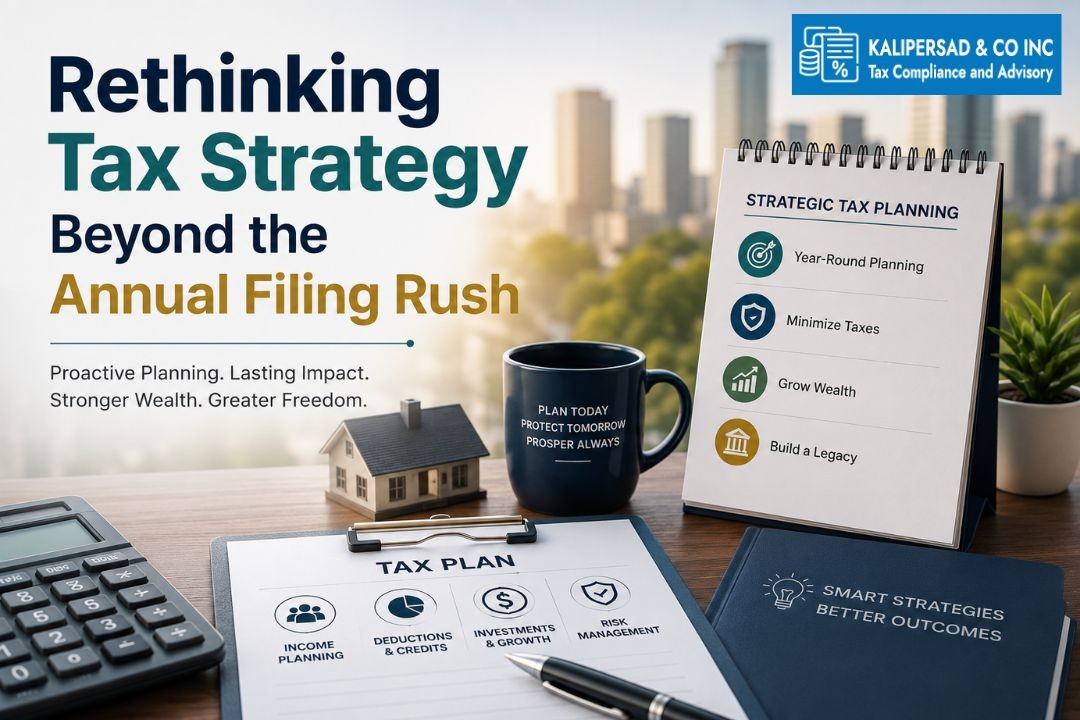
Business owners and high earners sometimes see tax season as a yearly deadline to just get through it, not really a chance to grow wealth. When you work with a trusted certified public accountant in NY, the talk starts moving away from just “are we compliant” and more toward the next steps for future financial growth. Tax season should not feel like an emergency every spring. It can be a planned check-in, kind of like a recurring moment on a multi-year wealth blueprint.
Still, a lot of individuals and entrepreneurs end up searching through lists of CPA firms in New York only after they get complicated IRS letters, or run into an unexpected tax liability. But picking a proactive tax accounting firm in NY is really about having a team that connects tax optimization, bookkeeping, and long-term legacy planning into your everyday financial structure. Not just a once-a-year scramble, more like steady guidance.
Why Does Proactive Tax Planning Matter More Than Annual Filing?
Because tax compliance is mostly looking backward at what happened last year. Tax strategy looks forward, at what you can influence today. Based on newer findings shared by the National Small Business Association, more than seventy percent of small business owners say the administrative weight of taxes makes it harder to reinvest capital into operations. A lot of the gap between average wealth preservation and maximum retention comes down to timing, and who is watching the clock.
When we review your financial records throughout the year, not only at year-end, we tend to spot structural possibilities that stay invisible during standard filing season. For example, choosing the correct entity structure, like an S-Corporation for self-employed professionals, can significantly reshape self-employment tax obligations. And, when expenses and operations are aligned with federal and state tax credits, you’re far less likely to miss out on money that was already there for the taking.
How Do Integrated Financial Services Protect Your Business Growth?
Managing finances in isolated silos often creates blind spots. A payroll firm might handle wages without considering state tax withholding nuances, while a separate bookkeeping service might misclassify operational costs. Integrating bookkeeping, payroll, tax resolution, and mortgage advisory into a unified framework creates operational efficiency.
| Financial Focus | Reactive Filing Approach | Proactive Strategic Approach |
| Timing | April filing deadline | Year-round strategic advisory |
| Primary Goal | Basic IRS compliance | Tax liability minimization & wealth retention |
| Recordkeeping | Yearly document aggregation | Weekly or monthly financial record analysis |
| Audit Risk | Addressed after notice arrives | Reduced through structured documentation |
| Growth Alignment | Isolated from business goals | Integrated with mortgage, estate, and expansion planning |
When financial records are reviewed regularly, potential discrepancies are resolved before they turn into IRS notices or audit triggers.
What Should You Look for When Choosing a Strategic Financial Partner?
Navigating federal and state tax laws takes technical depth and, honestly, years of practical experience through different market cycles. Whether you’re in real estate, a medical practice, construction, or hospitality, industry-specific knowledge does matter a lot; it’s not just generic numbers.
Here are a few key elements that usually show up in a strong financial partnership:
- Strong tax resolution options, including experience with audit reconsiderations, wage garnishment releases, and Offer in Compromise negotiations.
- Customized guidance for specialized legal setups like LLCs, S-Corps, and partnerships so income distribution can be optimized.
- Easy alignment with capital planning services, like residential or commercial refinancing and mortgage planning across all jurisdictions.
- Upfront pricing that keeps surprise billing away for routine compliance work and advisory calls- at least that’s the point.
When these pieces sit under one umbrella, business owners tend to get the clarity they need to make confident, strategic decisions instead of second-guessing everything.
How Can Estate Planning and Tax Strategy Secure Your Legacy?
Building wealth is only half of the story; protecting it for the next generation is the other side. Estate planning is often pushed back because people treat it as something for later life. But when estate planning is paired with federal tax strategy, assets can pass to heirs with less tax erosion, and that matters more than most expect.
From setting up living wills to handling gift tax returns and trust filings, early estate planning helps safeguard family assets from unexpected life events. And when your estate plan matches your current business structure, your succession plan can run more smoothly, without needing to liquidate core assets just to cover tax burdens.
Conclusion
Building long-term wealth requires moving away from reactive tax preparation toward an integrated, year-round strategy. By working alongside an experienced certified public accountant in NY, business owners and individuals can navigate complex federal tax structures with confidence. Selecting dedicated CPA firms in New York offers the foundation required for sustainable growth and audit protection. When you choose a qualified tax accounting firm in NY, your financial health remains guarded across every stage of business and life.
At Kalipersad & Co. Inc., our practice brings over twenty-five years of professional experience in tax preparation, IRS resolution, bookkeeping, mortgage services, and estate planning to help clients preserve capital and secure their financial legacy.
Frequently Asked Questions
- Why should I work with a certified public accountant instead of preparing taxes myself?
A CPA can provide guidance on tax planning, financial reporting, compliance, and long-term financial strategies that extend beyond tax preparation.
- How often should I meet with my accountant?
Many individuals and businesses benefit from quarterly or semiannual financial reviews, depending on their financial activities and goals.
- What should I look for when comparing CPA firms?
Consider experience, communication, industry knowledge, available services, responsiveness, and the firm’s ability to provide year-round financial guidance.
- Can a tax accounting firm help small businesses?
Yes. A tax accounting firm can assist with bookkeeping, tax planning, financial reporting, payroll guidance, and business consulting to support better financial management.
- Is financial planning only important during tax season?
No. Financial planning is most effective when it takes place throughout the year, allowing individuals and businesses to adjust strategies as financial goals and regulations change.